When to Opt for Multi-Course vs. Shared Platters in Weddings
Overview
- Choosing between multi-course plated meals and shared platters can shape the overall dining experience of a wedding reception.
- Each option comes with unique considerations that can affect guest experience, service flow, and catering costs.
Today, weddings are planned with a strong sense of intention, with every detail contributing to the overall experience. Dining, in particular, shapes how the celebration lingers in guests’ minds.
So, the choice between multi-course meals vs. shared platters in wedding setups is an important consideration for couples or planners. Why? Because it naturally guides the reception’s rhythm, flow, and atmosphere.
Both catering styles are widely used in modern weddings, yet they create very different experiences at the table. Knowing how each works makes it easier to choose a catering approach that fits the kind of celebration you want to create.
Multi-Course Plated Meals
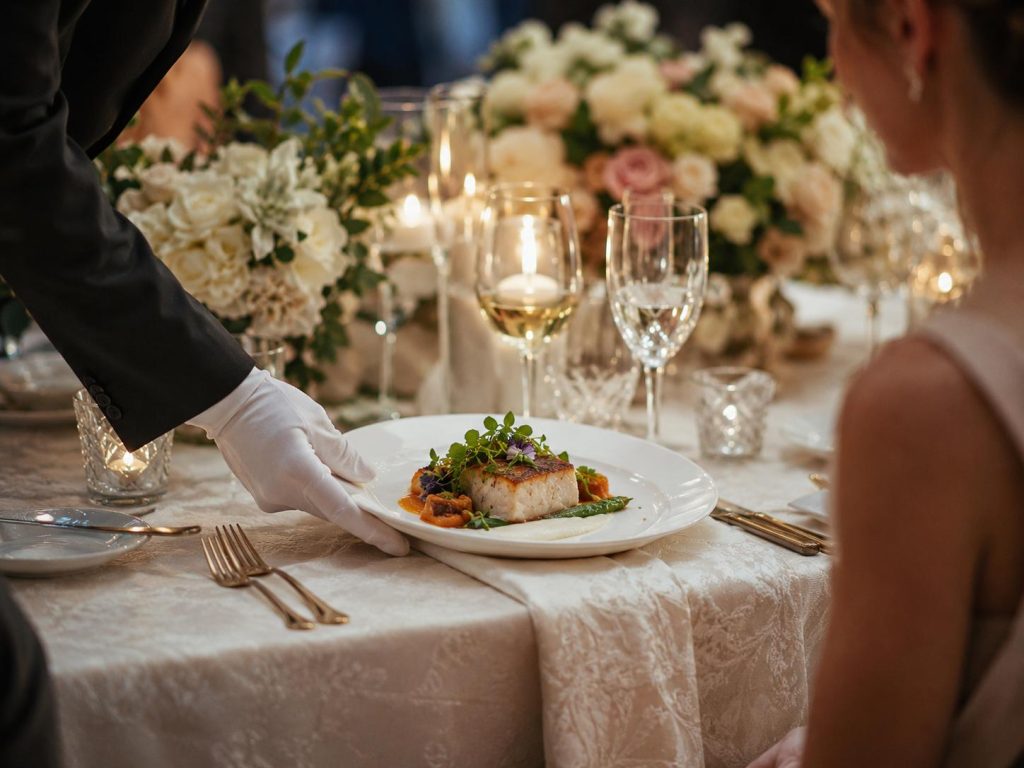
A multi-course meal features a sequence of carefully prepared dishes served in small portions, each designed to highlight culinary technique, seasonal ingredients, or distinctive flavors. The experience follows a structured progression that guides guests from lighter starters to more substantial main courses and, finally, to dessert.
Best for: formal gatherings like weddings, business dinners, and structured multi-course tasting events.
The Vibe: Refined, intentional, and elevated, with each course building anticipation and heightening the sense of occasion.
Elegance
Plated dinners naturally carry a sense of sophistication, with guests remaining seated as each course is served directly by professional waitstaff. This style of service creates a more formal and refined atmosphere, often reminiscent of a fine-dining restaurant or a well-orchestrated gala.
Portion Control
In plated service, each guest is served equal portions for every course. This consistency helps maintain balance at the table and ensures that all guests enjoy the same dining experience throughout the meal.
Dietary Needs
The kitchen team prepares and plates each guest’s meal individually, allowing specific dietary requirements to be carefully accommodated. This also helps reduce cross-contact for guests with allergies or food restrictions.
Potential Considerations
A plated dining experience thrives on careful timing and coordinated service. Because each course is served and cleared individually, it may require additional staffing and a longer dining schedule to maintain a seamless flow throughout the celebration.
Shared Platters (Family-Style)
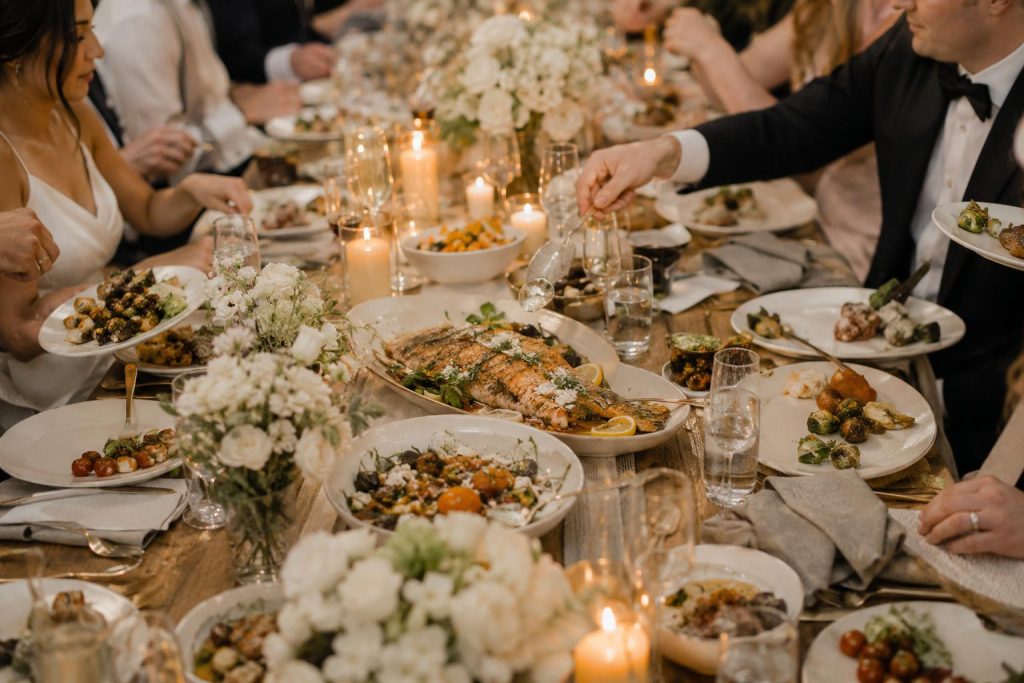
Shared platters, also known as family-style dining, involve serving dishes on large platters placed at each table for guests to share. This setup encourages interaction and conversation, which creates a more communal dining experience throughout the celebration.
Best for: private dinners, engagement parties or weddings, and casual gatherings.
The Vibe: Warm, relaxed, and interactive as guests naturally engage with one another as they share dishes.
Variety
A selection of dishes is served on large platters placed at the center of each table, allowing guests to enjoy different combinations of proteins, vegetables, and sides.
Pacing
Family-style dining does not follow a synchronized course schedule. Guests dine at their own pace, often resulting in a longer, more relaxed meal.
Staffing Savings
Shared platters generally require fewer service staff than individually plated meals. Service teams typically focus on refreshing platters and clearing tables.
Potential Considerations
Family-style dining tends to be more hands-on than individually plated service, so it relies on thoughtful menu selection and table planning. Dishes should be easy to share and arranged so that each guest can enjoy every component of the meal.
Cost Comparison
| Catering Style | Cost | Reasons |
|---|---|---|
| Shared Platters | Lower labor costs | Due to fewer servers needed, guests serve themselves, reducing waitstaff requirements. |
| Plated Dinners | Higher labor costs | Due to more kitchen crew, servers, and runners needed for timed courses and individual plating. |
Factors Affecting Pricing
Whether you choose plated meals or shared platters, catering costs depend on more than just the dining format. These considerations can affect food preparation, staffing, and event logistics.
- Guest Count: Larger guest counts require more food, staffing, and coordination, which can influence overall catering costs.
- Menu Complexity: Menus with multiple courses, premium ingredients, or customized dishes often require additional preparation and resources.
- Venue Requirements: Venue accessibility, facilities, and setup requirements can affect catering logistics and operational expenses.
- Service Staff Needs: Plated service usually requires more servers and coordination than shared platters do, increasing labor costs.
- Custom Dietary Requirements: Gluten-free, vegan, allergy-safe, or other special meals often need separate prep and handling, which can increase cost.
Find the Perfect Wedding Dining Experience with Juan Carlo
Whether you prefer a multi-course plated meal or shared platters, the right choice depends on the dining experience you want to create for your guests. At Juan Carlo, we help couples choose a catering style that suits their wedding vision. Our team thoughtfully curates menus and service experiences that complement the celebration. With decades of catering expertise, we are committed to creating memorable dining experiences for every occasion.
Key Takeaway
When comparing multi-course meals vs. shared platters in wedding setups, the best choice is the one that complements your desired guest experience, reception flow, and overall wedding vision.
Our decades of experience in creating memorable celebrations guarantee that we can help you curate a dining experience that feels thoughtful, seamless, and uniquely suited to your event.
Get in touch with our team today to start planning your ideal wedding menu and service style.